Natchez unveils second historical marker honoring Prince Abdul Rahman Ibrahima
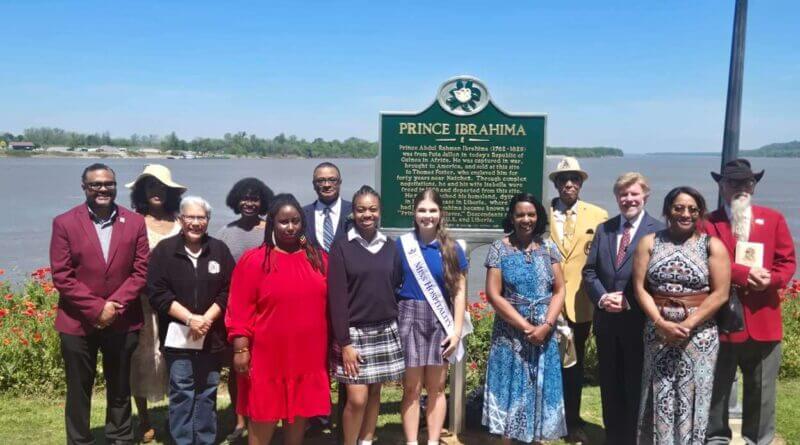
NATCHEZ — The City of Natchez unveiled a historical marker Wednesday on Silver Street honoring Prince Abdul Rahman Ibrahima near the riverfront site where he arrived as an enslaved man in 1788 and later departed as a free man on April 8, 1828.
City officials said the marker commemorates Ibrahima’s journey from enslavement to freedom and highlights his connection to Natchez’s history. Shabilla Adams and Beverly Adams, who the city identified as direct descendants, attended the ceremony.
Shelia Byrd, deputy director of the Programs and Communication Division at the Mississippi Department of Archives and History and a former Associated Press reporter, spoke at the event. Byrd said the marker reflects Natchez’s willingness to acknowledge the full scope of its history, including difficult chapters tied to slavery.
The city said Ibrahima was a Muslim prince from Timbo in the Futa Jallon region of present-day Guinea. He was captured in battle in 1788, sold to slave traders and endured 40 years of enslavement on Thomas Foster’s plantation near Natchez before gaining his freedom.
Mayor Dan Gibson said the city has a responsibility to tell the full story of those who helped build Natchez and that Ibrahima’s life represents the broader history of enslaved people whose labor shaped the community. The Silver Street marker is the second in the Natchez-Adams County area honoring Ibrahima; the first was unveiled in October 2025 on Highway 61 North near Historic Jefferson College and focuses on his 1807 meeting with Dr. John Coates Cox, city officials said.
We will provide more information as it becomes available.