Traffic Tip Tuesday: Be prepared for challenging driving conditions caused by bad weather, which can occur unexpectedly even if the forecast looks clear. Proper vehicle maintenance is essential before hitting the road.
Check that your battery is charged, windshield wipers work properly, tires are well-inflated with good tread, and headlights function correctly. Always buckle up before driving.
Adverse weather such as rain, snow, ice, fog, and sun glare can make driving hazardous. When facing poor conditions:
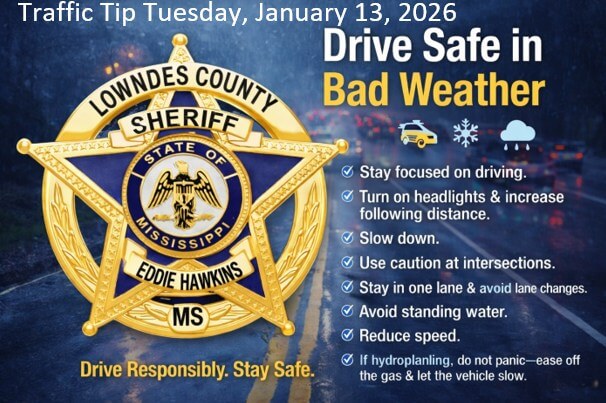
Stay focused — keep both hands on the wheel, eyes on the road, and your mind on driving.
Turn on headlights to improve visibility and ensure you’re seen. If your wipers are on, headlights should be on too.
Increase following distance to allow more time to react.
Reduce speed, as stopping distances grow on wet or slippery roads.
Exercise extra caution at intersections, even with a green light, watching for vehicles, pedestrians, and cyclists.
Stay in one lane as much as possible and avoid unnecessary lane changes.
When driving in rain, if visibility worsens, pull over and wait for the storm to pass. Stay inside your vehicle to avoid lightning risks. Watch out for hydroplaning, which occurs when tires lose contact with water on the road.
Avoid standing or running water when possible.
Reduce speed and take turns slowly.
If your vehicle hydroplanes, do not panic or slam the brakes. Hold the steering wheel firmly, keep it straight, and ease off the gas until traction returns.
Driving in fog requires slowing down and using fog lights if available. Do not use high beams, as they reflect off the fog and reduce visibility.
Bad weather demands patience and extra caution. Slow down, stay alert, and arrive safely. Drive responsibly and stay safe.